 265 St. Vincent St,



Winter looks peaceful from the window, but everything changes once you step outside with a shovel. Heavy snow, awkward angles and cold muscles collide in a way your back doesn’t appreciate, especially early in the season when tissues are tight. At Blair Chiropractic & Massage Therapy, we see a predictable surge of low-back strains within the first two major snowfalls and most injuries happen before people feel conditioned for winter work.
A few strategic changes in how you warm up, lift and pace yourself can dramatically reduce the risk of pulling your back and none of them require athletic training or fancy gear. It’s simply about treating your spine like a structure that deserves preparation rather than punishment. And that mindset is at the core of effective snow shovelling safety, because most injuries come from small decisions made in the first ten minutes outside.
When you slow down enough to notice how your body feels, you create room to move with more control instead of reacting to the conditions. Even minor adjustments – using your legs more, taking shorter loads or pausing before fatigue sets in – can shift the entire experience from risky to manageable.
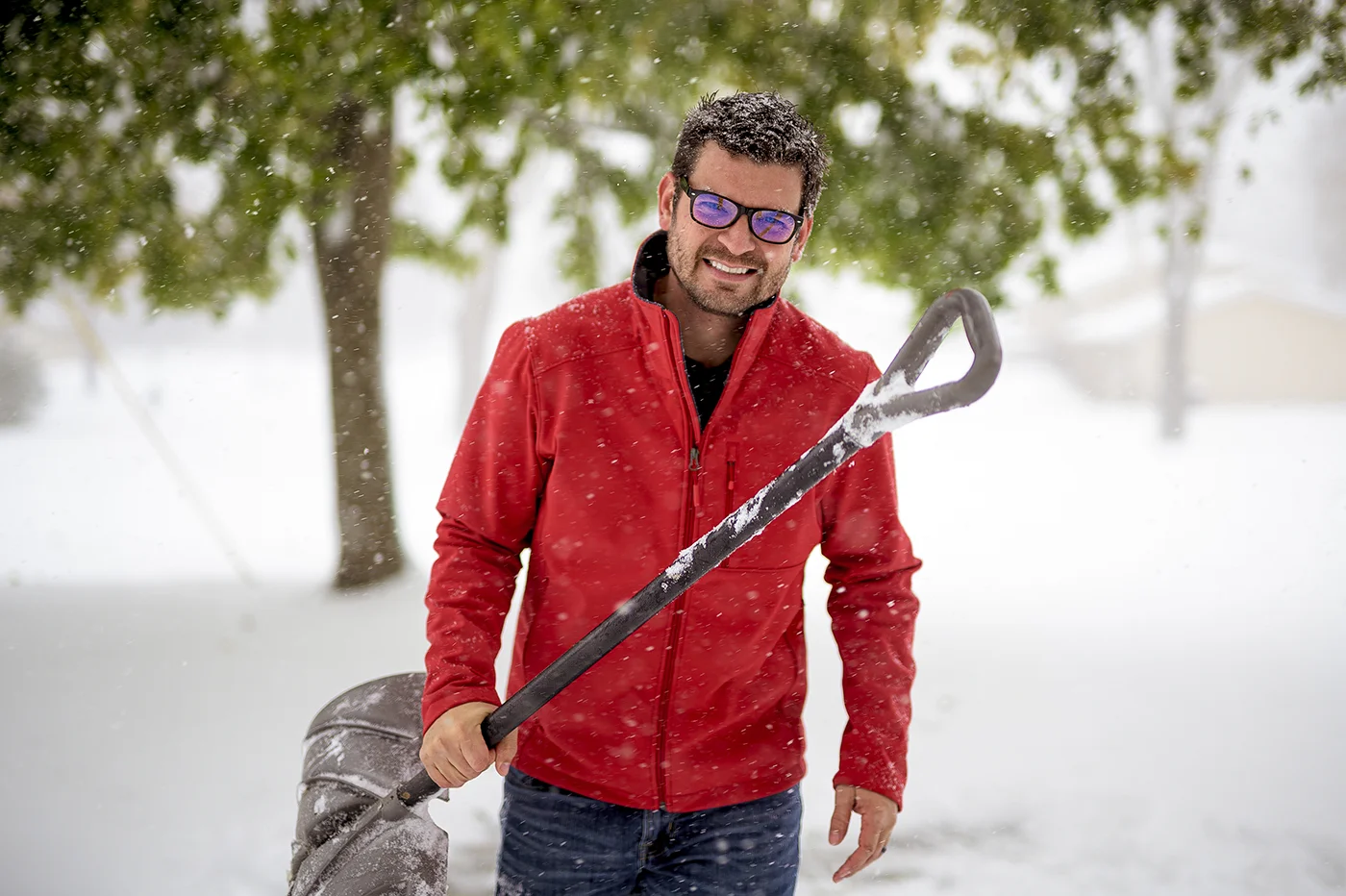
Why Snow Shovelling Strains the Back More Than People Expect
Your spine handles daily loads well, but snow shovelling introduces stresses it isn’t naturally designed for. Cold muscles lose flexibility, rotational torque increases with each scoop and the lifting angle forces the lower back to work harder than it should. Even moderately wet snow can weigh 15–20 pounds per shovel, which creates a high-volume workload within minutes without you realizing it. We often hear patients say they felt “one wrong pull,” and that moment typically lines up with a twist or lift performed under fatigue.
Two real-world patterns show up repeatedly in our clinic. First, early-season stiffness increases injury likelihood by roughly 30–40 percent because tissues haven’t adapted to winter tasks. Second, twisting to throw snow over the shoulder accounts for most acute strains, because lumbar discs don’t tolerate rotation under load. Add slower circulation in cold temperatures and muscles fatigue faster than expected, creating a perfect scenario for injury. These factors combined explain why even strong, active people end up with sudden back pain after what feels like a routine chore.
A Quick Litmus Test – When to Stop Mid-Driveway
Recognizing early warning signs prevents the kind of strain that tightens an hour later and becomes a multi-day issue. If your back starts to feel uneven, weak or sharper than the usual “work fatigue,” that’s a clear signal to pause. Many patients push through because they want to finish the driveway and that decision often turns a manageable irritation into a full strain. Your body rarely gives subtle signals without reason and snow shovelling is one situation where those signals are remarkably accurate. Stopping for just a minute or two is usually enough to reset your form and spare your spine from unnecessary stress.

Warm Up Like You Mean It – Yes, Even for Shovelling
A warm-up may feel excessive for a household chore, but it makes a measurable difference in preventing low-back injuries. Cold muscles respond poorly to sudden force and even a brief primer increases blood flow, improves coordination and helps stabilizing muscles wake up. Patients who warm up report smoother motion and fewer catching sensations during the first few lifts. It also builds awareness of how your spine feels before you load it, which is valuable for identifying issues early rather than once pain appears.
A Simple 90-Second Routine
This short routine is easy to remember and quick to perform and it sets the stage for safer movement. Start with a slow walk up and down the driveway to increase circulation and gently activate your legs. Add a few controlled hip hinges to reconnect with neutral spine positioning, which many people lose during the winter months. Finish with marching in place while lightly tightening the lower abdominals so your core supports your spine before the first lift. The whole routine takes less than two minutes, but in our experience, it meaningfully lowers the risk of early-set fatigue and awkward movement patterns.
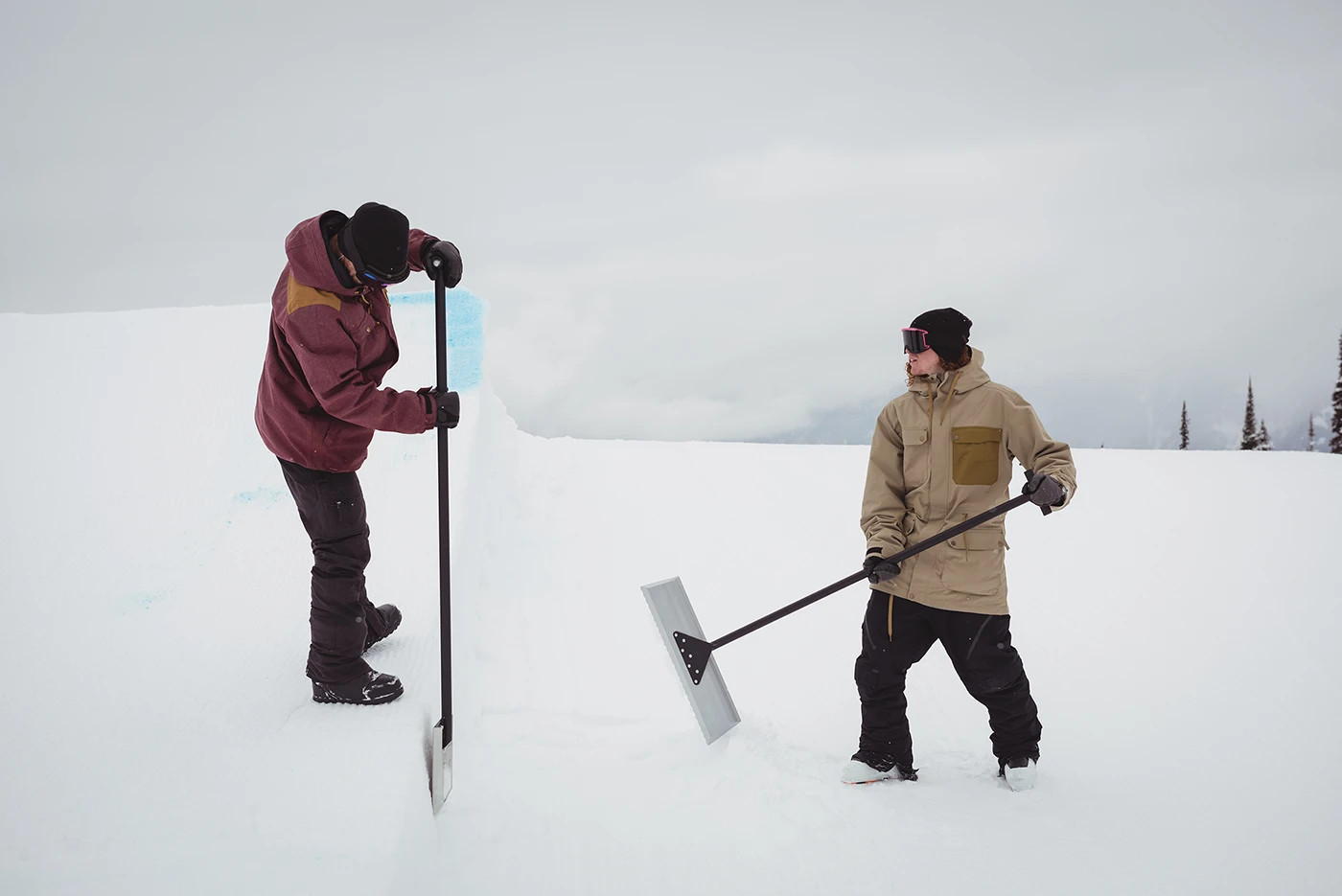
Choose the Right Shovel – It Matters More Than People Think
Shovel design changes how much strain your back absorbs and choosing the wrong one creates unnecessary work. People often assume a wider shovel is more efficient, but wider scoops lead to heavier loads and quicker fatigue. A lightweight ergonomic handle encourages a more upright posture, which reduces lumbar compression throughout the task. Small upgrades like a non-stick blade also make a difference because wet snow tends to cling and double the perceived load. These small details sound minor, yet they consistently show up in patient stories when we trace how their injury occurred.
What We Recommend in the Clinic
A curved ergonomic handle supports better leverage, making the movement feel more controlled even when snow is heavy. A smaller scoop size may seem less efficient, but it significantly reduces load per lift and protects the spine during longer cleanups. A non-stick blade is especially helpful after freezing rain, because it prevents build-up that forces awkward, jerky motions. The only real trade-off is the initial adjustment period – ergonomic shovels can feel strange at first, but most people adapt within minutes and notice less strain immediately. These changes aren’t cosmetic; they directly affect how safely your body handles repetitive winter work.
Lift the Snow, Don’t Twist With It
Twisting under load is one of the fastest ways to irritate lumbar structures and snow shovelling creates endless opportunities to do exactly that. As you fatigue, your feet stop moving and your spine begins rotating to compensate, which increases disc pressure with each repetition. Many patients tell us they knew twisting was harmful but underestimated how often they did it once they were tired. The spine is strong, but it isn’t built to rotate while lifting weight away from the body, especially at low temperatures. Avoiding rotation protects not only the lower back but also the surrounding muscles that stabilize it during forceful tasks.
A Better Movement Pattern
Start by keeping your chest pointed toward the direction where you’ll place the snow, which naturally discourages twisting. Move your feet to reposition your whole body rather than relying on your spine to rotate the load. Treat each scoop as a short carry instead of a throw so the weight stays close to your center of mass. This shift in mechanics reduces torque through the lower spine and keeps the movement predictable instead of jerky. Patients who adopt this pattern often tell us their back feels more stable even after a full hour of shovelling – a small technique tweak goes a long way.

Pace Yourself Before Your Back Forces You To
Shovelling the entire driveway in one long stretch feels efficient, but it’s one of the most common setups for injury. Fatigue doesn’t arrive suddenly; it builds slowly until your stabilizing muscles stop supporting the spine effectively. By the time you feel the first twinge, the tissue is already irritated. Breaking the task into smaller segments gives your body time to recover and prevents the technique breakdowns that lead to sloppy lifts. Even highly conditioned patients benefit from pacing, because winter loading is different from gym exercise – the conditions are cold, uneven and repetitive.
A Practical Work–Rest Rhythm
Work for eight to ten minutes at a steady pace, then pause for a minute or two before continuing. Stand upright during breaks to offload the spine and include a brief stretch for the hip flexors, hamstrings and shoulders. This short reset improves blood flow and helps your body maintain better form throughout the entire job. People often underestimate how much quality declines during the last 20 percent of effort, when fatigue silently takes over. Using this rhythm reduces that issue dramatically and as tedious as it sounds, the payoff is fewer injuries and a faster recovery afterward.
Know When Your Back Is Signalling a Real Issue
Not every ache signals a problem, but certain sensations should prompt you to stop immediately. Sharp pain, radiating discomfort or a sudden locking feeling isn’t normal fatigue – it’s your body asking for a reset. Many patients chalk these sensations up to “just getting older,” yet the real issue is usually a mechanical overload that can worsen if pushed. Paying attention to these cues helps prevent minor irritation from escalating into a strain that lingers for days. The faster you respond to early signs, the more control you keep over your recovery window.
Red Flags We Want You to Take Seriously
Pain that travels down the leg, numbness, difficulty standing upright or intense stiffness the next morning is worth evaluating. These symptoms may indicate nerve involvement or significant muscular guarding and both benefit from early treatment. We’ve seen countless cases where a small injury spiraled because someone tried to finish the job despite warning signs. Taking a short break or stopping entirely often prevents additional stress on already irritated tissue. If something feels sharp, uneven or unfamiliar, assume your spine is giving you valuable information – and act accordingly.
How We Help at Blair Chiropractic & Massage Therapy
When a back strain happens, early intervention makes recovery smoother and more predictable. At Blair Chiropractic & Massage Therapy, we use chiropractic adjustments to restore proper joint mechanics, soft-tissue therapy to reduce tension and targeted exercises to stabilize the lower back. These approaches work together to calm inflammation while improving mobility in a safe, controlled way, especially after shovelling-related strain. Patients often notice improved motion within the first few visits, though deeper tissue recovery usually continues for several days. We guide you through that stage so you reintroduce movement gradually rather than guessing your way through it.
Our team also looks for patterns – poor lifting mechanics, weak glute activation or limited hip mobility – that contributed to the injury. Fixing these root factors prevents repeat strains, particularly when winter chores keep repeating themselves. Even if your pain decreases quickly, lingering inflammation can cause stiffness to return unless you manage it properly. We step in at that moment to keep you progressing instead of stalling and we tailor care to how your body responds rather than using a one-size-fits-all plan. If you pulled your back this week or want a safer approach to winter work, Blair Chiropractic & Massage Therapy is here to help you move confidently again – and with far less guesswork.
If you’re noticing sharp pain, persistent stiffness, radiating symptoms or anything that feels “not quite right” after shovelling, contact us today so we can assess your back and guide you toward the right next steps.
 Call/Text Us
 WhatsApp Us
 Visit Us